



Octagon Earthworks
Newark, OH
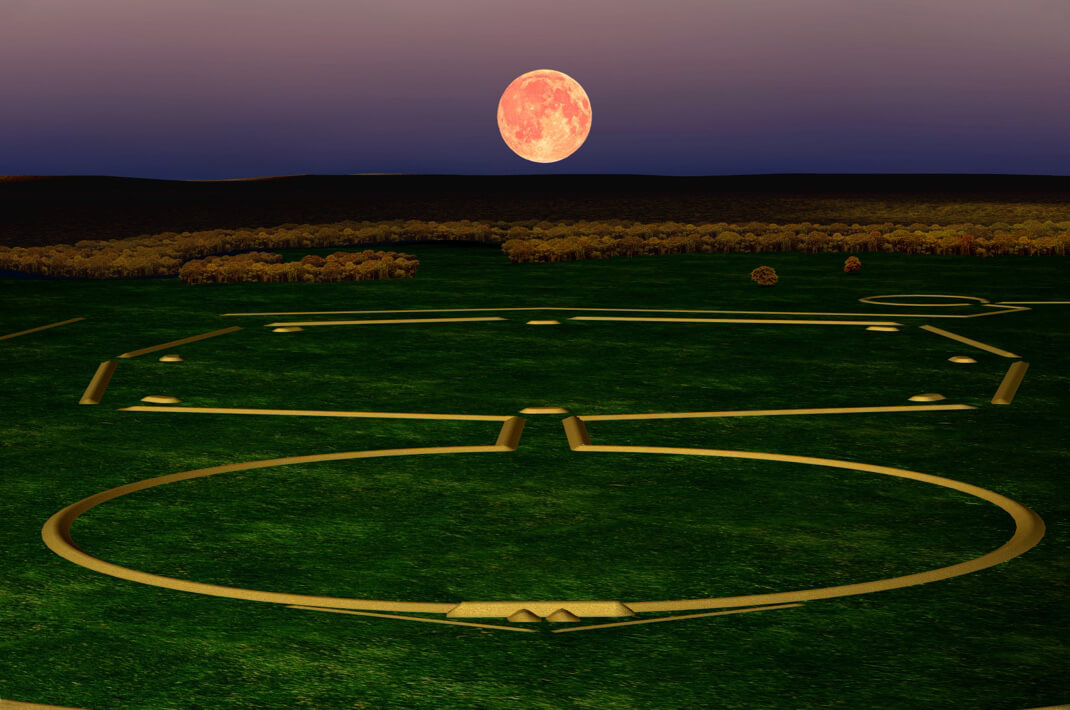
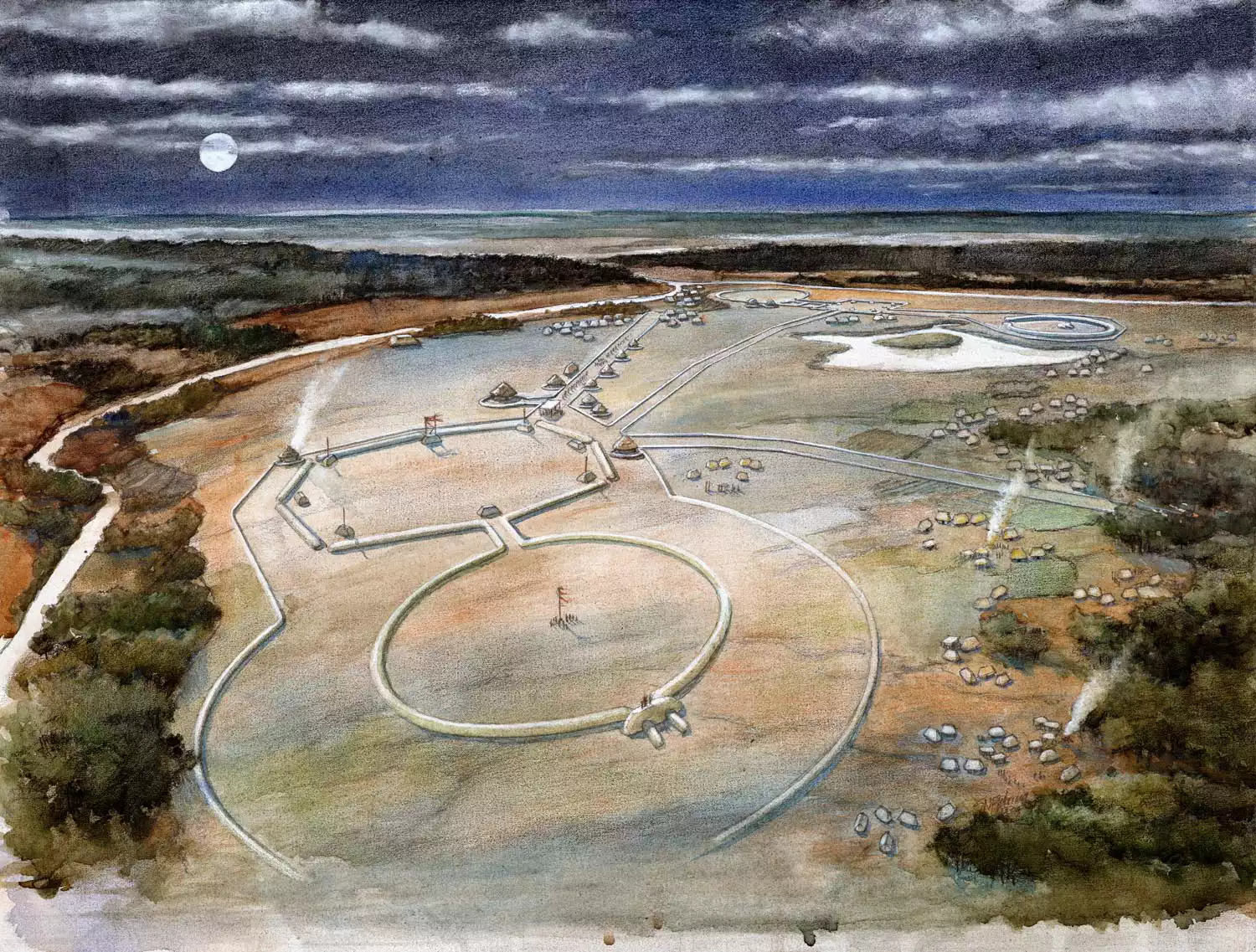
One of the grandest remnants of the Newark Earthworks, the Octagon Earthworks is an architectural feat of astonishing precision. Its unique and somewhat mysterious shape was built by dispersed people on a scale that required remarkable collaboration and an advanced understanding of the cosmos.
 Home
Home- Hopewell Ceremonial Earthworks Sites
- Octagon Earthworks
Visitor Info
125 N. 33rd St.
Newark, OH 43055
- Park grounds: The Octagon Earthworks site is open to the public during daylight hours.
- Visitor center: Open from 11 a.m.–2 p.m. from Wednesday–Sunday.
- Sat., April 4 & Sun., April 5 (Easter) - CLOSED
Coordinates:
40.0519828 °N
82.4463745 °W
What you'll see
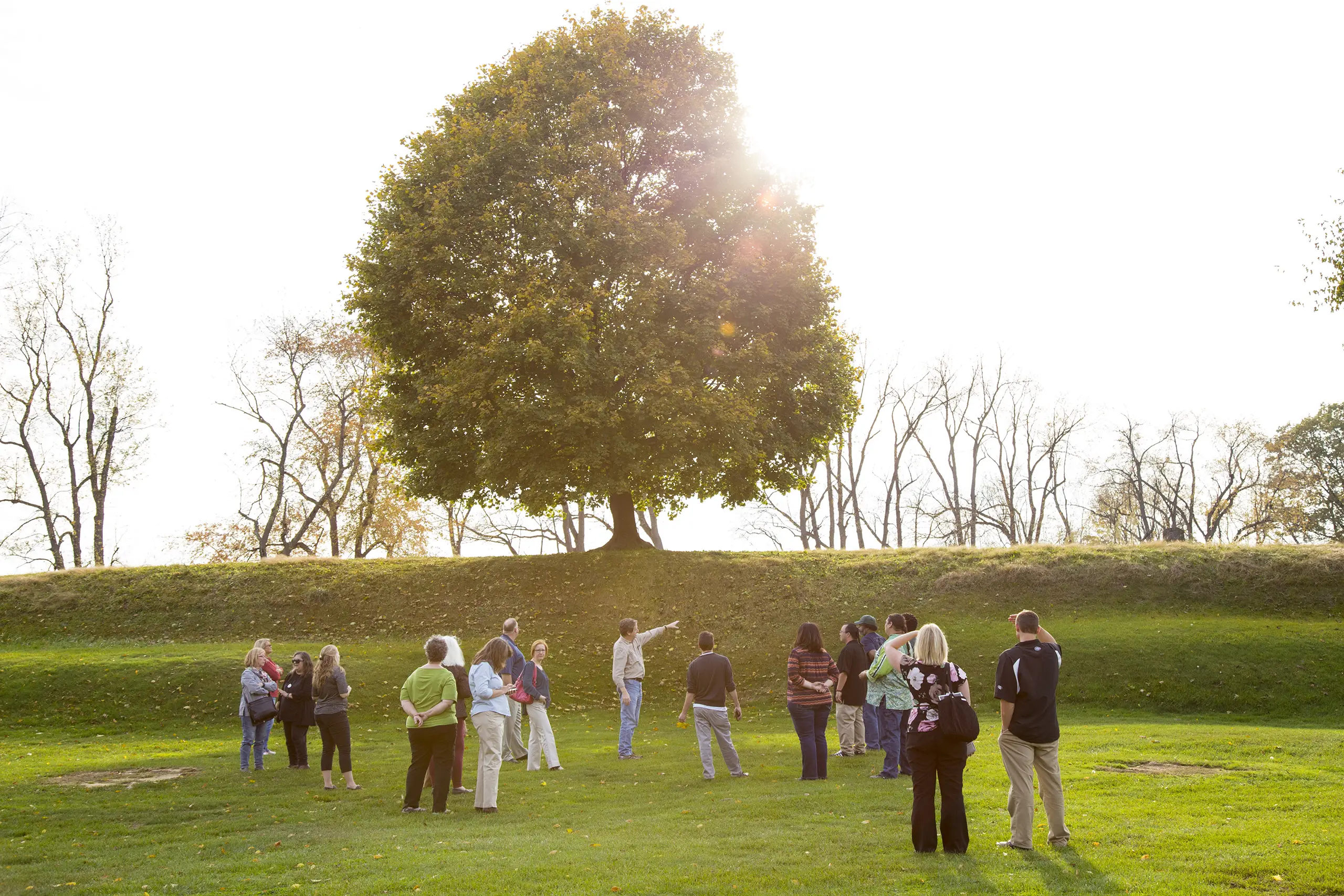
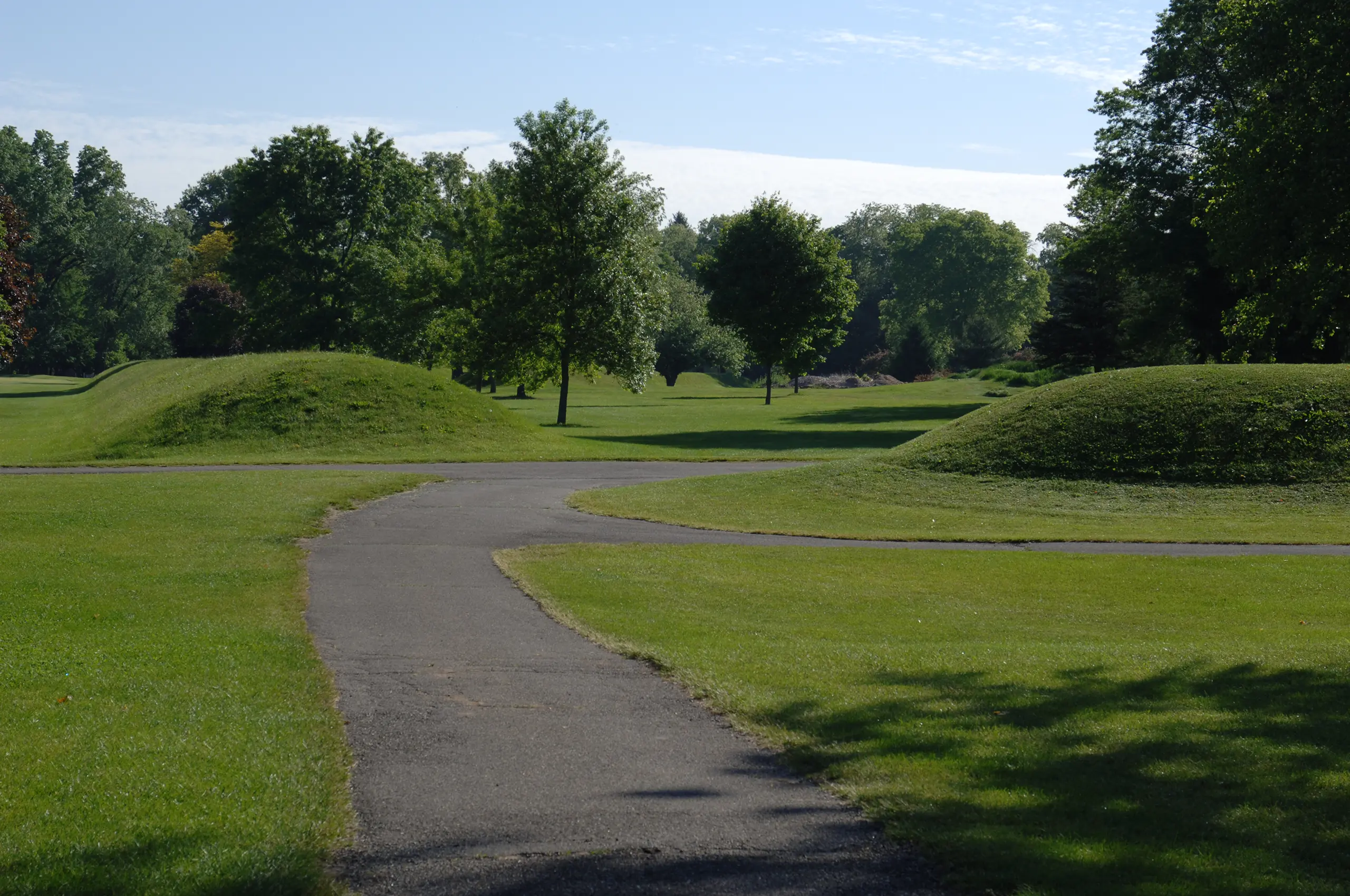
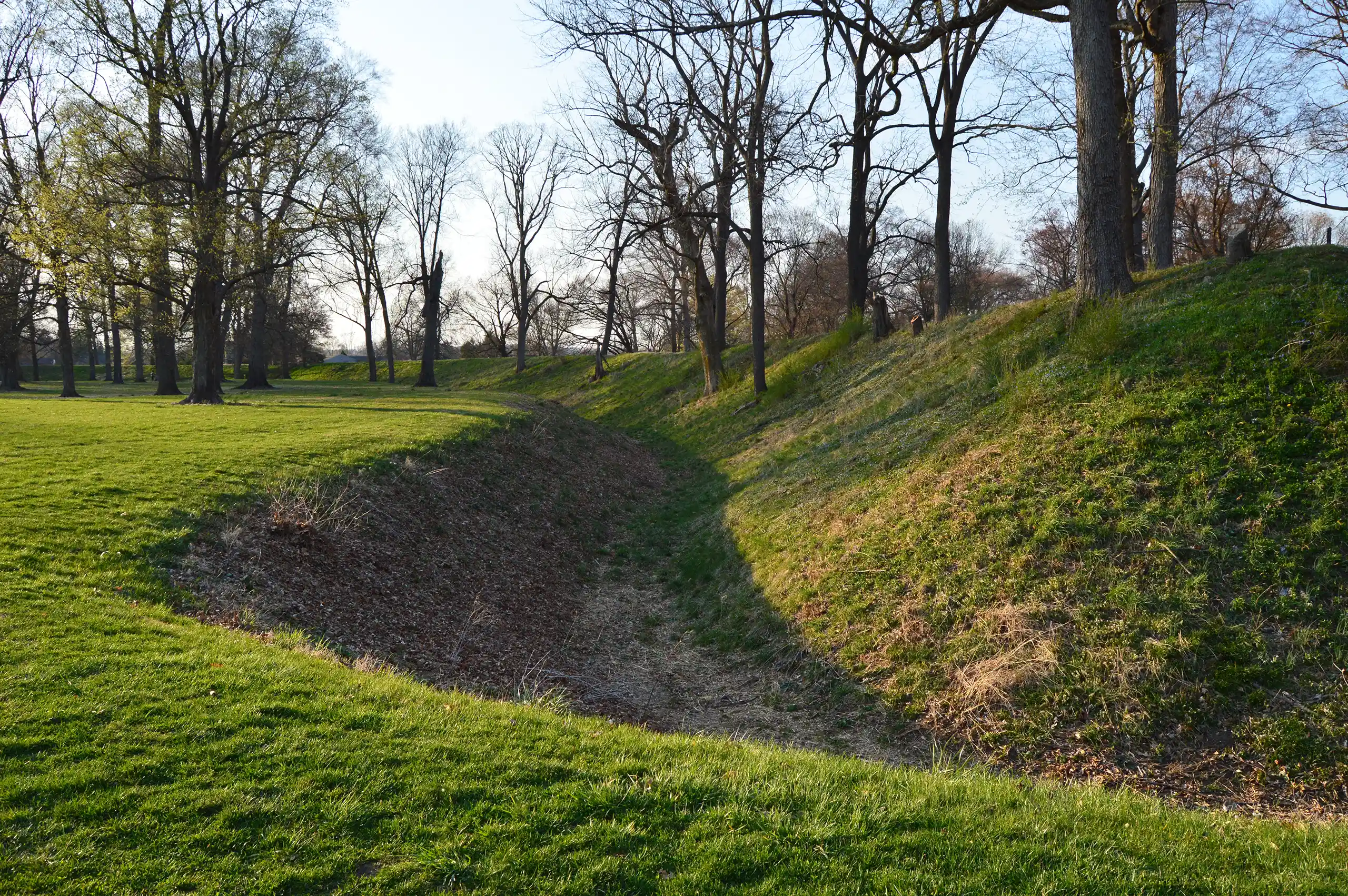
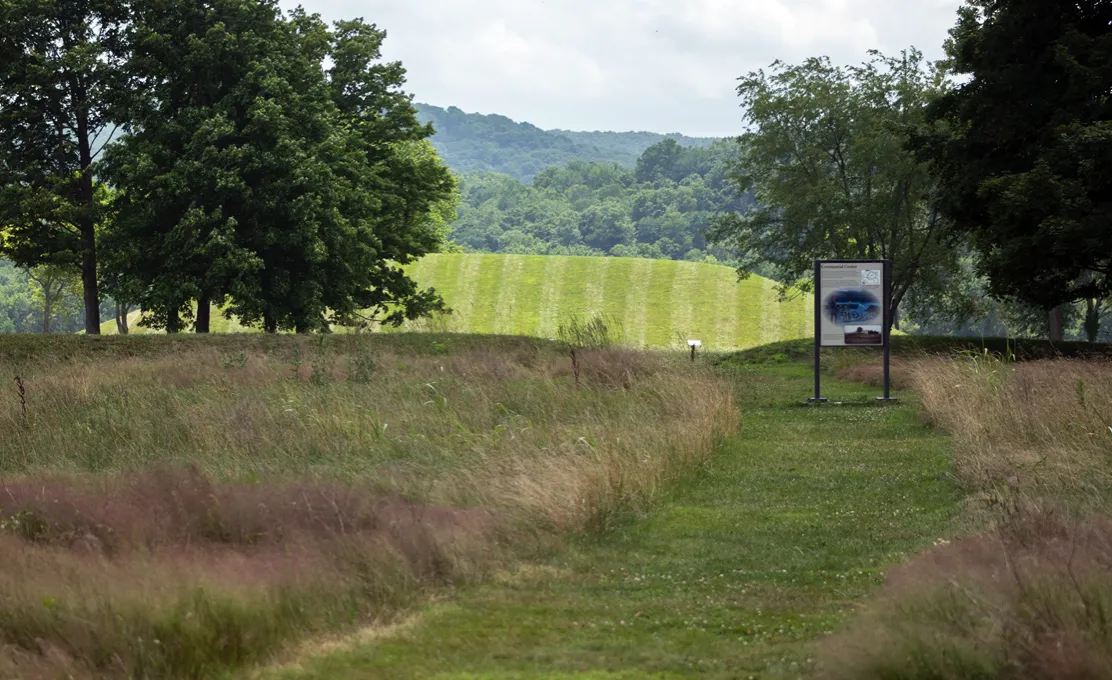
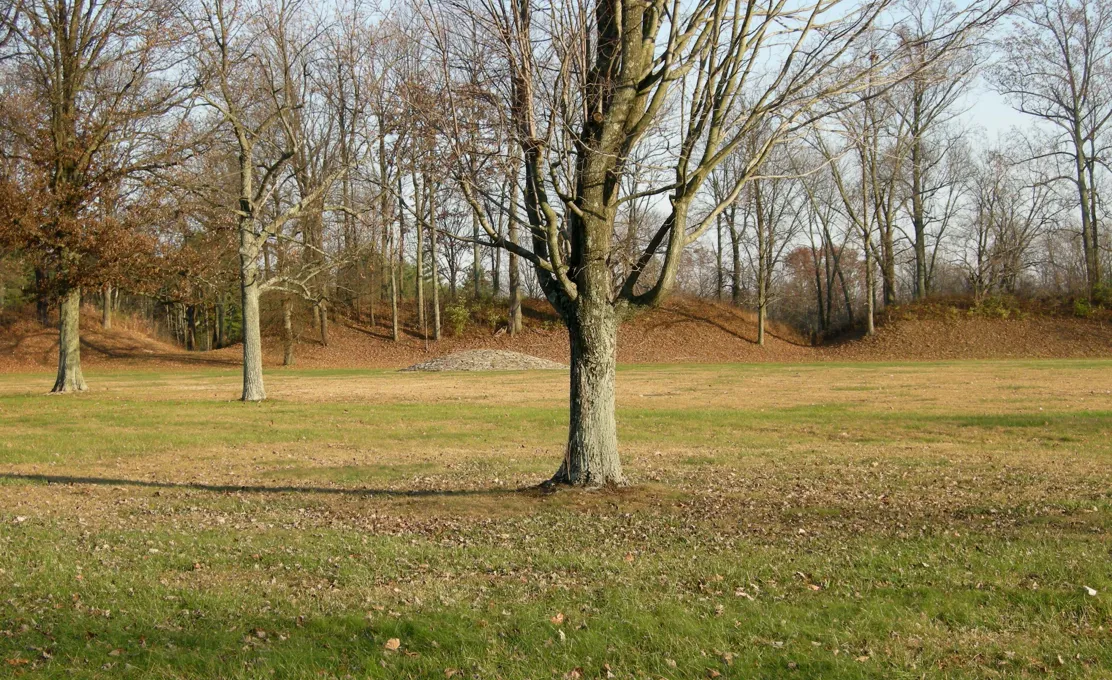
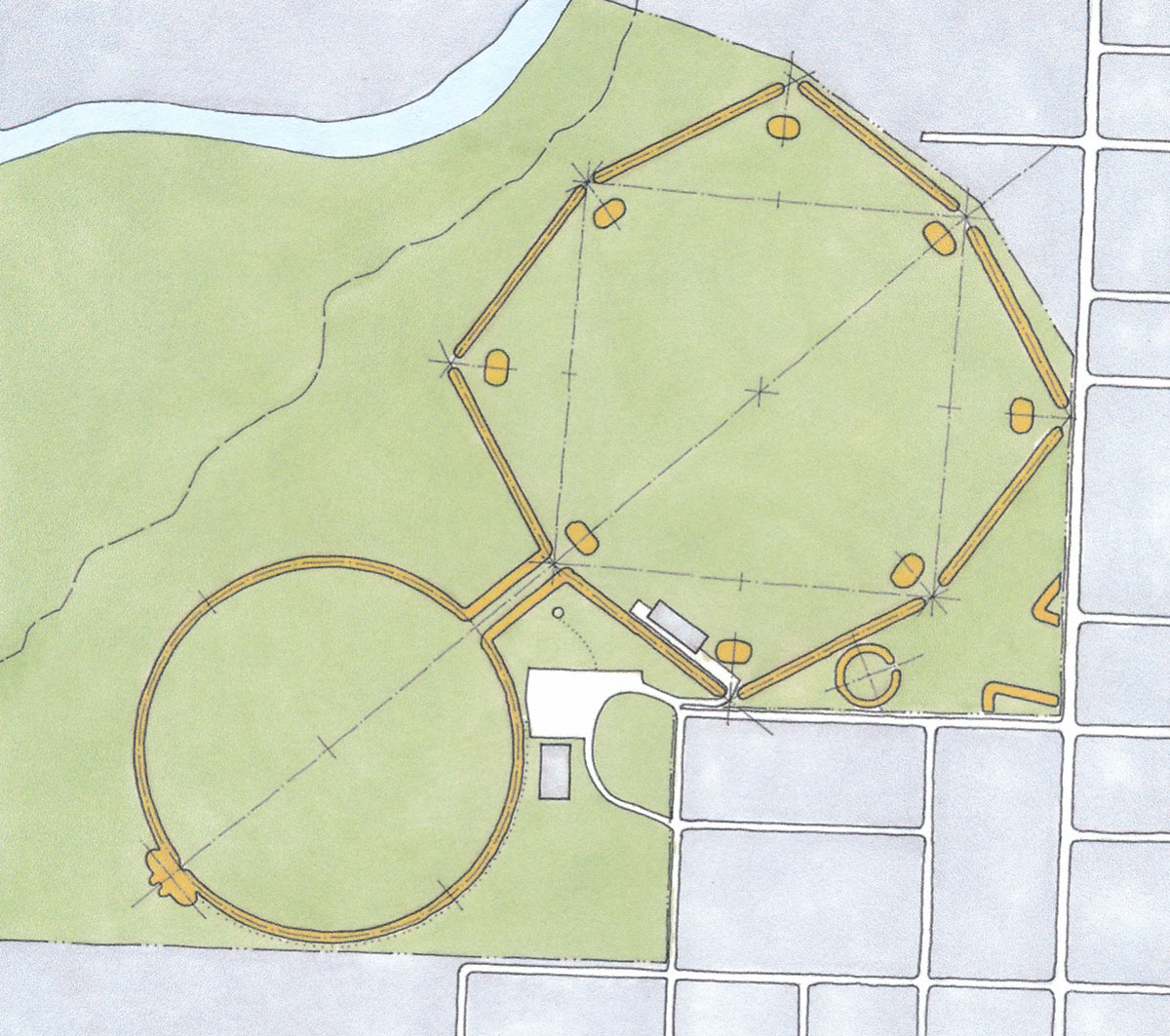
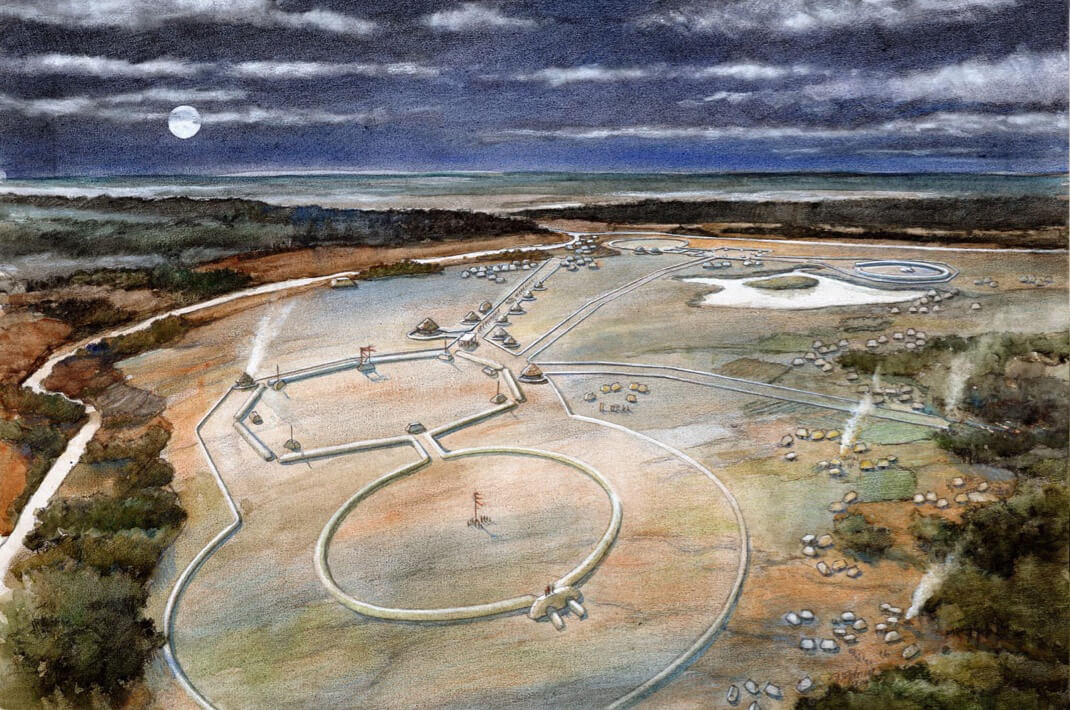
The Octagon Earthworks is made of two geometric enclosures: A large circle enclosing 20 acres, and an even larger octagon enclosing 50 acres, connected to one another by an avenue. The walls of these shapes reach eye-level, and show how the Hopewell culture had an understanding of soil science, as they only selected soil with properties that would maintain the integrity of the mounds.
Directly across from the avenue, there is a break in the circular wall where two parallel extensions originally projected outward, forming a gateway. This former gateway is covered by a large, earth and stone platform mound called the Observatory Mound.
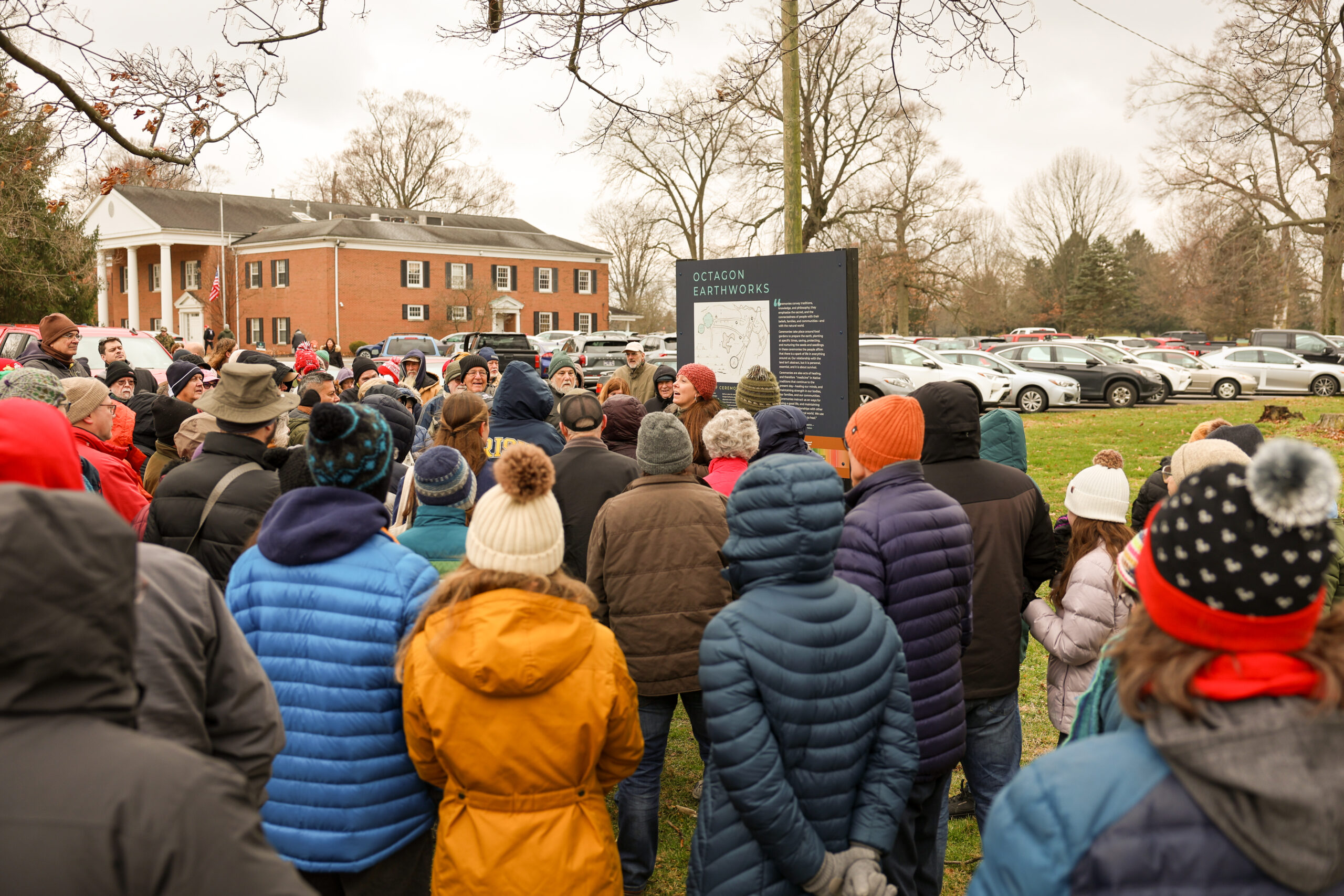
If you are in need of any special accommodations for a tour, please reach out to newarkearthworks@ohiohistory.org. Tours are available for an additional cost at the Octagon & Great Circle Earthworks. Free monthly tours are also provided. For more information, click here.
Archaeology & Artifacts
Few archaeological investigations have been performed at the Octagon Earthworks, and as a result, no known artifacts have been uncovered. Because the walls and interior spaces are relatively intact, it’s exciting to think about what future archaeological investigations will reveal about these structures and their builders.
Must See at Octagon Earthworks

Photo by: Ohio History Connection
Photo by: Ohio History Connection

Photo by: Ohio History Connection
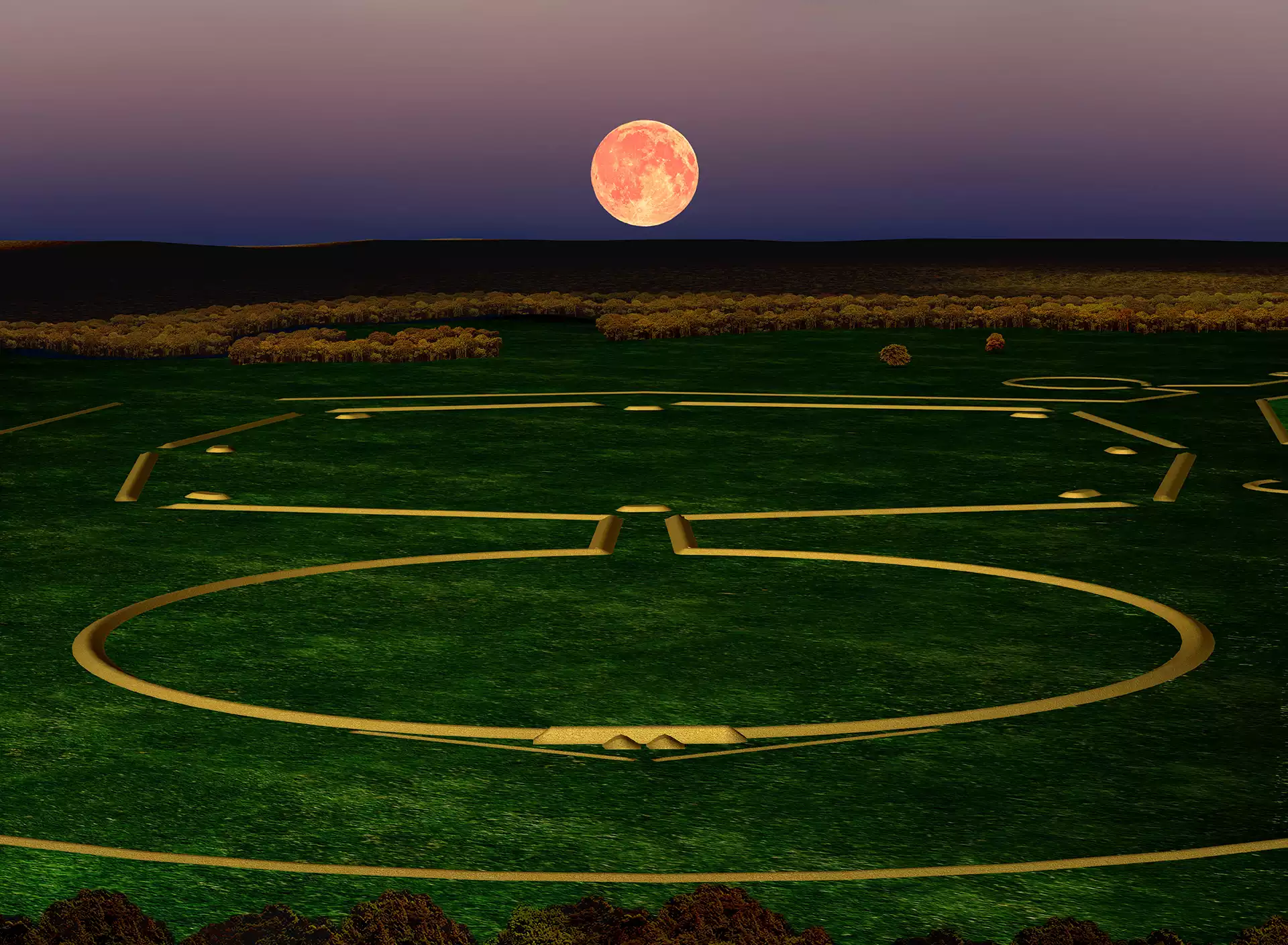
Photo by: CERHAS
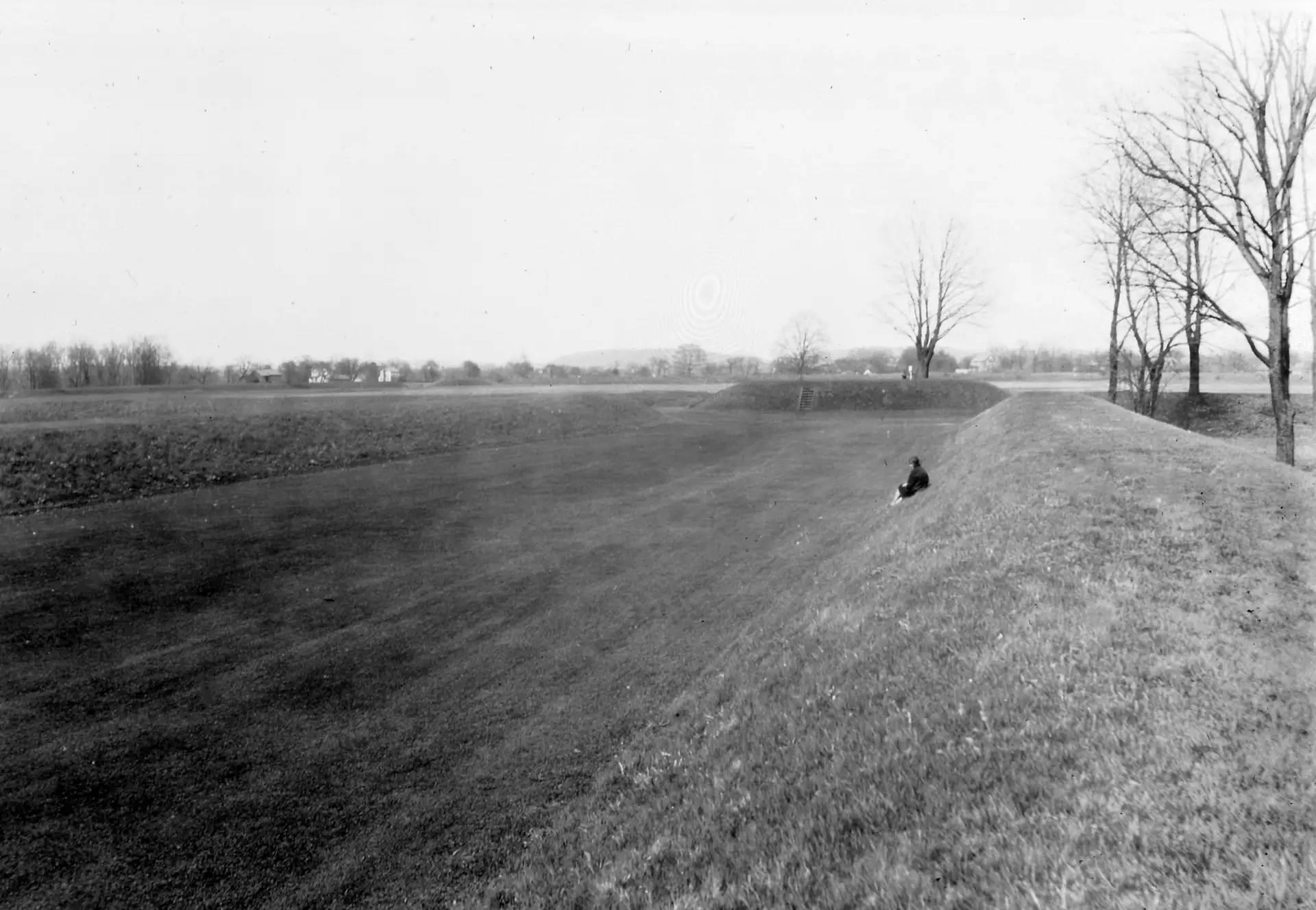
Photo by: Ohio History Connection

Photo by: Ohio History Connection
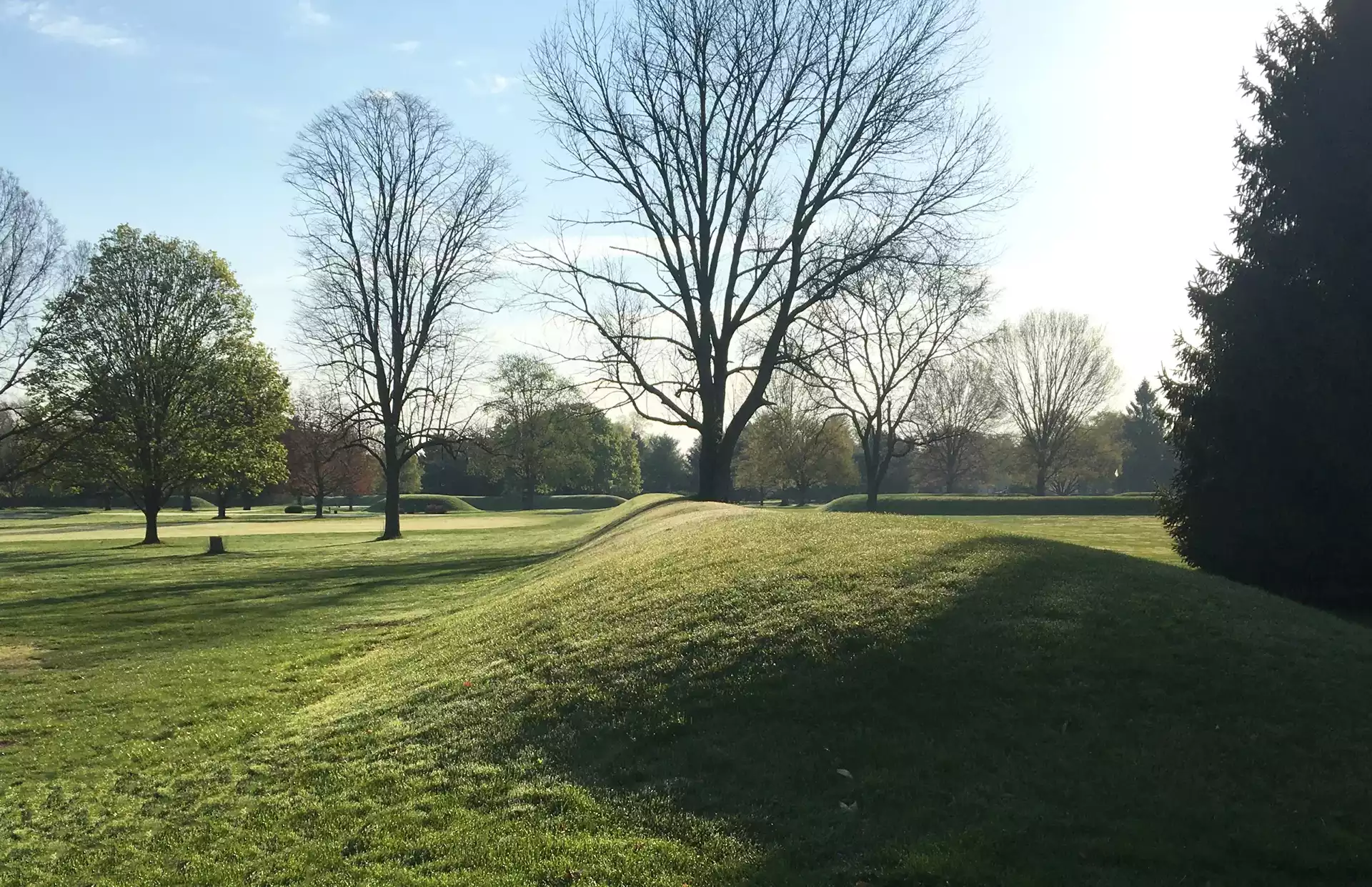
Photo by: Bradley T. Lepper
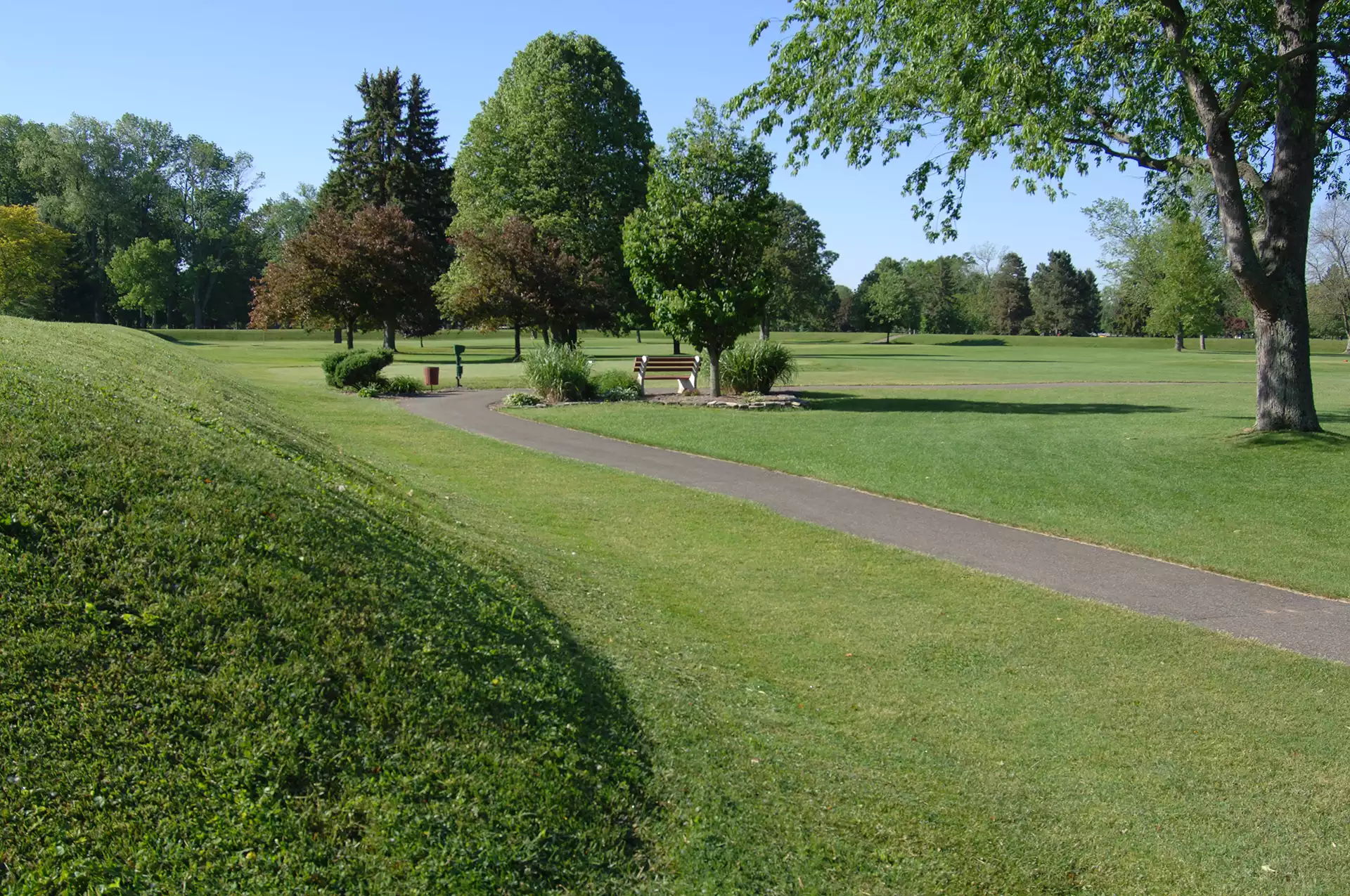
Photo by: Ohio History Connection
Courtesy of Steven-Patricia, RA/Art Institute of Chicago
Witness Ancient Brilliance
The Hopewell Ceremonial Earthworks, a UNESCO World Heritage Site, span several locations in Ohio. Each earthwork has its own marvels and wisdom to reveal, and is worthy of witnessing firsthand.